

Ten Years of Helping Compatriots: 2,300 People Have Completed Our Integration Program
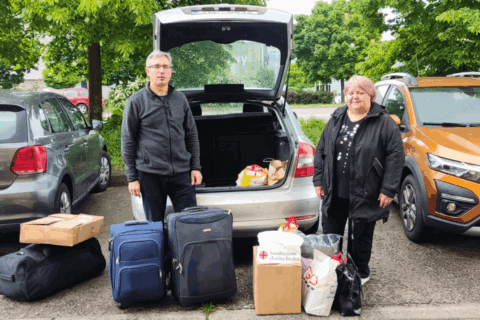
When Mrs. Yris flew to Prague last year, she had a Venezuelan passport in her pocket, several family photographs, and a Czech grammar book in which she had circled basic phrases. Her grandfather left Czechoslovakia after World War II and taught her only a few Czech words. Today, fourteen months later, she lives in her own apartment in Tábor and works as a warehouse worker.
„Without support, I couldn’t have started a new life here,“ she says in still broken Czech, which is rapidly improving thanks to Czech language courses.
Yris’s story is not unique. Over the past ten years, the Caritas of the Archdiocese of Prague has helped approximately 2,300 compatriots and their descendants who decided to return to the land of their ancestors as part of a resettlement program implemented according to a government resolution from 2014.
„Imagine relocating to a new country where Ukraine or Venezuela has been your homeland until now, and you don’t know a single word of Czech,“ explains Světlana Porsche, head of the Migration Center of the Caritas of the Archdiocese of Prague. „A new beginning will be difficult, which is why we are here with our integration program,“ she adds.
In 2015, the Ministry of the Interior was looking for an organization that could handle the complex set of challenges associated with compatriot resettlement. The Caritas of the Archdiocese of Prague won the public tender.
From Airport Terminal to Own Home
The assistance begins even before departure to the Czech Republic, when Caritas workers provide compatriots with advice on what to take with them and what to leave behind. After arrival, they are accompanied to accommodation facilities in South Bohemia, which provides initial support.
„The first weeks are crucial. We help with processing all necessary documents – from obtaining permanent residence to exchanging driver’s licenses or recognizing university diplomas – and organize intensive language courses,“ Porsche describes. „We provide compatriots with detailed information about the insurance system, residence requirements, healthcare, and education so they can navigate their new environment.“
This is followed by assistance with finding permanent housing, employment, healthcare, and in the case of families, enrolling children in schools and kindergartens.
This intensive support continues for up to one year after arrival. „Our services are comprehensive and cover all areas of life,“ Porsche explains. „Just to give you an idea, over the past four years we have worked nearly 13,000 hours providing counseling to compatriots.“
The largest number of people resettled from Ukraine, followed by immigrants from Venezuela, Russia, Belarus, and Moldova.
Assistance Will Continue for Another Four Years
Thanks to recent success in a public tender, the Caritas of the Archdiocese of Prague will continue working with compatriots for the next four years, until the end of 2028.
„We view winning the tender as recognition of our ten years of work and at the same time as a great commitment,“ Porsche concludes. „Every resettled compatriot experiences a unique story of returning home, and we have the honor of being part of it.“
The compatriot resettlement program remains one of the most successful integration projects in the Czech Republic. Not only does it enable people with Czech roots to return to the land of their ancestors, but it also enriches Czech society with motivated citizens who seek and find their new home here.
Help those who are in need
„One who is gracious to a poor man lends to the Lord, And He will repay him for his good deed.“ (Proverbs 19:17)
Your donation:
- funds food aid and shelter for those who are in need,
- supports social services for seniors, people with special needs, families in need, victims of domestic violence and those who have found themselves in a life burdening situation
- supports education for disadvantaged children in developing countries.
Donate now
You can donate one-time or become a sustaining donor. Donations of any amount are accepted and greatly appreciated!
Thank you for your support!
online a hned